
Francis Kurkdjian: the art is in the heart
My grandmother used to say that the house is in the heart, because wherever your heart is alive, in that place you will feel at home. The same principle holds true for art: the artist needs to be inspired and excited to create.
Isn’t it true that when we are in love, when we experience intense emotions, the context becomes a part of the whole? Each small detail in that moments, the houses, the streets, the smells, become part of the memory and the intensity of feeling condenses into it. Our mind distills every precious shade and creates the essence of a moment in time.
It has probably been so for the artist Francis Kurkdjian. What was certain since childhood, was his creative spirit and his passion for art. He imagined himself in many contexts : dancer, couturier, fashion designer, but the art of perfume was his destiny and, like two halves that rejoin each other, he pursued the study of perfumery and perfume met his talent.
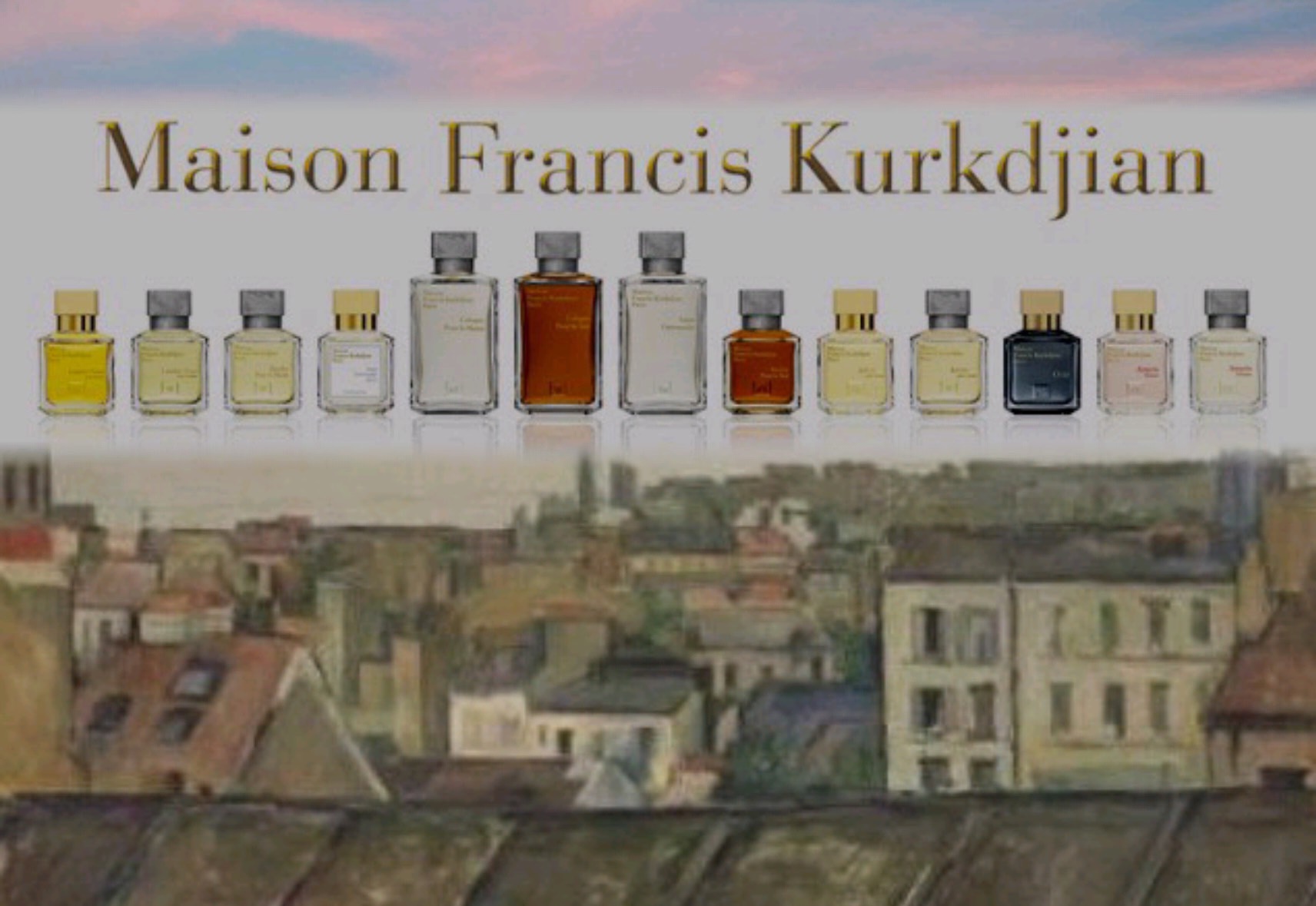
When he was 25 (years old), he had already created the Mȃle for Jean–Paul Gaultier. In 2001 he won the prestigious Coty Award, a prize of great importance, equivalent to cinema’s Oscar for a perfume. In the same year he opened his first atelier of bespoke fragrances and in 2003 he began several important collaborations with the most prestigious and representative companies. More than 40 successful creations bear his signature, in Dior Privée collection, among Guerlain fragrances, Acqua di Parma, Christian Lacroix, Davidoff, Giorgio Armani, Emanuel Ungaro, Elizabeth Arden, Escada, Ferragamo, Kenzo, Lancaster, Lancôme, Juliet Has a Gun, Lanvin, Yves Saint Laurent, Narciso Rodriguez, Van Cleef & Arpel, Versace and Elie Saab. In 2009 he founded the Maison Francis Kurkdjian that now includes 29 fragrances, of which 24 are currently distributed in Europe.
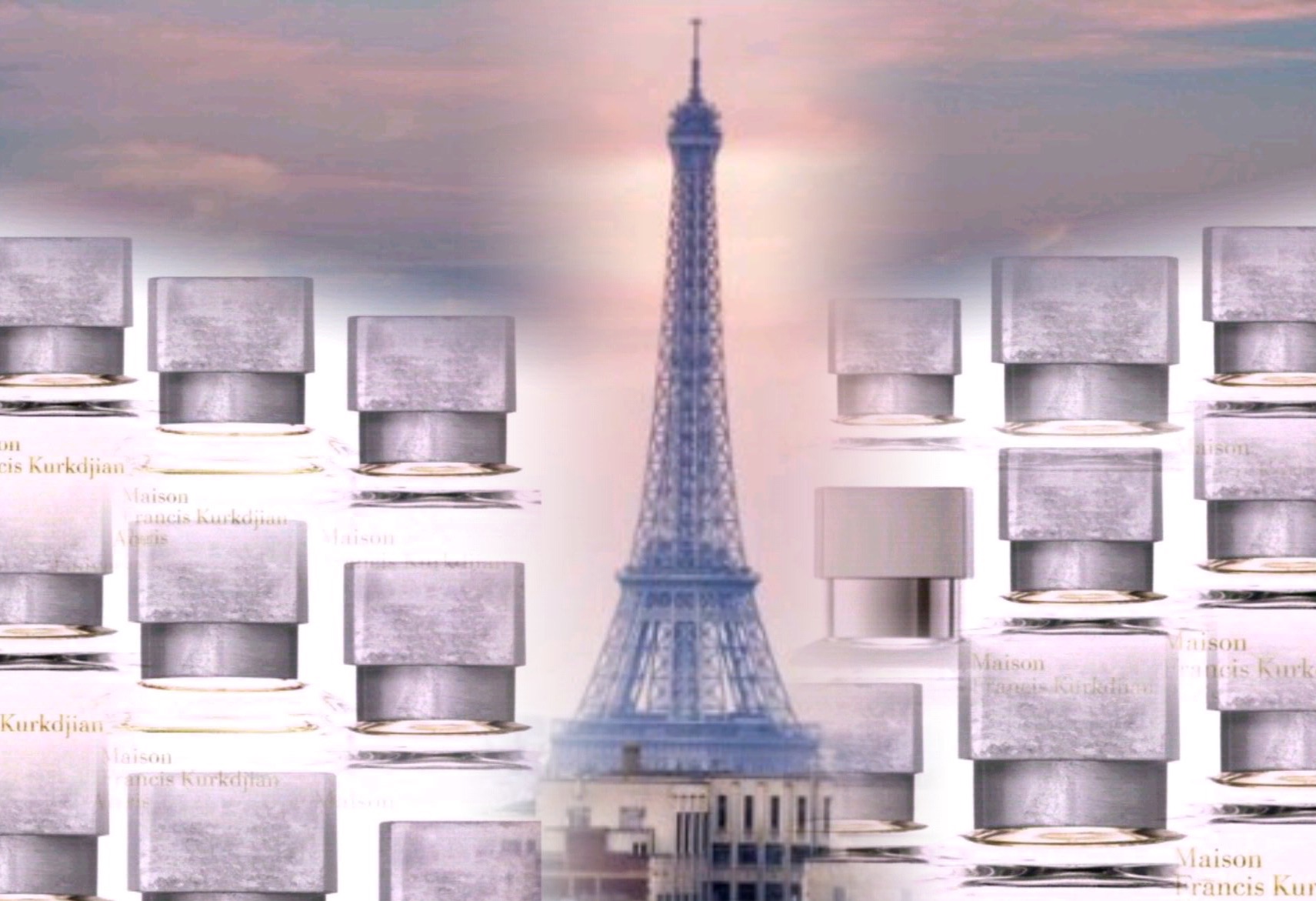 The bottles of the collection are themselves works of art, beyond what we could grasp at a glance. The fragrances are made with caps in zinc. A call to the roofs of Paris, built in Slate coated zinc and destined to become a World Heritage Site because of their uniqueness that has inspired painters, photographers and filmmakers. “…A whole with the sky on rainy days that seem to confer to this city an even more melancholy and romantic touch”. For some of his fragrances, the zink cup becomes golden as a tribute to the Ville Lumière, the city of the many lights, with romantic lamps that dot the streets of Paris to the glitter of the Eiffel Tower. A view that becomes unforgettable.
 But this is just one of the details noteworthy. The small pipe which allows the fragrance to flow from the bottle to the spray is deliberately invisible. If you look at the fragrance in transparency, all that you will admired is the precious essence, with no elements or details that interfere or disturb the look. Linear shapes, square, essential, almost palaces with roofs of zinc where time stands still, the feeling it is condensed and everything becomes a dreamlike interpretation of the abstract symbolism of an open window on the city.

If you look at Paris through a bottle of A la Rose, it may occur that you’ll have the impression to hear in the distance Edith Piaf that languidly sings “La vie en Rose”. The fragrance itself is an expression of the femininity, gentleness and poetry that no other scent might best accompany a romantic getaway in a place that was the focal point and source of the Belle Epoque; more or less like the atmosphere that Woody Allen tried to portrait with his movie Midnight in Paris, perhaps not the most faithful representation, but it gave us the idea of the artistic fervor that still permeates, through present and the distant echoes, the city that makes us fall in love.
Altri articoli